Market Season: What You Need To Know | Tips From Seasoned MWFC Makers
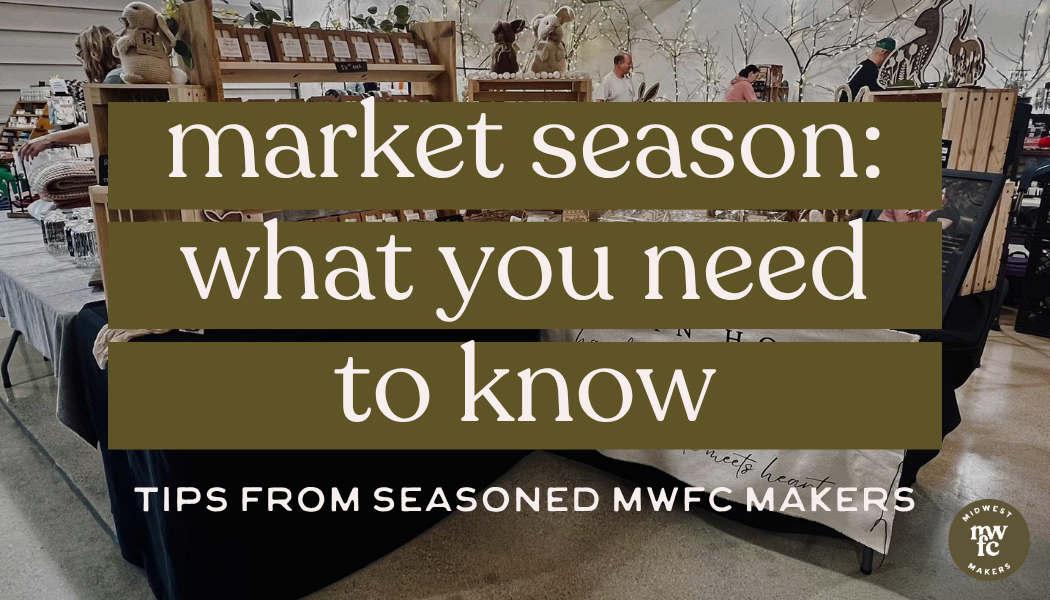
There’s something special about watching people experience your products in real time, smelling your scents, asking questions, and connecting with you and the story behind what you make- which is why so many makers love handmade markets!
If you’re planning to step into the world of handmade markets this year, we made this guide for you.
Because let's be honest, markets are amazing, but they can feel very overwhelming at first.
What should you bring? How do you stand out? What actually makes people stop at your booth?
This guide walks through the key pieces to focus on as you prepare for market season, from your product lineup to how to connect with your customers.
Think of this guide as a friendly roadmap to help you show up feeling prepared, confident, and most of all- excited!
How To Be Prepared For Your First Market
Before your first market, your brain is probably telling you to focus on products, products, products.
And yes- products are important! But what experienced makers will tell you is that everything else you bring with you on market days is equally as important.
Market days are long, draining, and can be unpredictable. Ask any maker and they can tell you that at some point, something will probably go wrong at a market. Good preparation and 'just-in-case' items can save your entire day.
PS: we created a free checklist for you!
First, let’s talk about the basics.
If the market doesn’t provide them, you’ll want to bring:
A table (or two, depending on your setup)
Chairs (a lot of makers love standard camping chairs that are easy to pack!)
A canopy if your market is outdoors
If you have a canopy, bring weights (these are a must-have if any wind picks up!)
Full length tablecloths (make sure they are full length to hide any products stored under your table)
Signage for your business
Signage for pricing (making your prices easy to find = more sales!)
Business cards (on the table and in every bag)
Change for cash purchases
A card reader for card purchases
QR code signage for scan-and-pay (optional- but highly recommended!)
One more note on payment methods:
Always have a backup payment option that isn't cash. Many makers in our community mentioned that they've had their POS system failed mid-market, and having a second card reader or alternative option can save the day.

Now, let's talk about the things you may not think you need- until you need them.
Those were the basic "need-to-have" items for markets, but it’s the “you don’t think about it until you need it” items that really make a difference.
Weather protection is a big one.
The weather can start out sunny and perfect, but it can change in a snap.
Makers recommend bringing things like:
Clear plastic or shower curtains to quickly cover your table if it rains (bonus: customers can still see your products through them if they're clear!)
Clips, zip ties, or weights to keep everything secure in wind (without weights, a gust of wind can, and will, ruin your day)
Spare waterproof tablecloths or even a couple of towels to dry things off
As a little note here: for warmer markets, personal fans (especially portable or wearable ones) are a game changer.
Your own comfort is something that is easily overlooked during market prep.
While it's important to look presentable and well-put-together to customers, make sure your outfit is comfortable to wear for the entire market- especially your shoes. You might be so busy that you're on your feet without a chance to sit for hours- and if your market is outside, you could be in really hot (or really cold) temperatures.
Hydration + snacks are a 100% must.
Bring more water than you think you’ll need, especially if there aren’t food or drink vendors nearby. A market outside in the heat can dehydrate you quickly. Snacks are also a must to keep your energy up- plus, you might not have time to step away from your booth to purchase any vendor food.
Let's talk about the tech you need to bring.
If you’re working an all-day event, remember to bring a power bank/portable charger or portable power station. They come in clutch when/if you need them, and you won't have to worry about anything running out of battery.

If you rely on your phone or tablet for payments, inventory, or tracking sales:
Bring a portable charger
Consider a WiFi hotspot if service might be spotty
Have a simple backup system (even writing things down) just in case
Transport is another thing that seasoned makers quickly learn to plan for.
The first part of transport happens in your car. Pack everything in your car so nothing slides around, and make sure that anything heavy is kept separate from anything fragile.
For when you get to your market, a sturdy cart or wagon can save your back during setup and breakdown. These are super handy if you’re hauling heavier products like candles or carrying multiple bins of products and displays!
A few more small but impactful things makers love to bring:
Bags for customer purchases (and even branded ones, if you have them)
Small freebies like branded stickers to include with purchases
A notebook or device to track what sells
Lights, if your market runs into the evening
A cooler if you’re bringing heat-sensitive products
At the end of the day, you can go in as prepared as possible- but it takes repetition to really figure out what works for you and understand what you need.
Take note during markets of things that don't work and reflect on those later, then ask yourself- is there something I can invest in that will solve this problem or make the process easier?
And one of the most repeated tips from experienced vendors:
Having a checklist.
Even if you think you’ll remember everything, it’s surprisingly easy to forget something small (or even something major, like a table). Having a go-to packing list takes that pressure off and helps you feel more in control.
The goal here isn’t to be ready for everything- you never know what might happen! But it's important to be ready enough that you can adapt, stay comfortable, and focus on what really matters: connecting with your customers and enjoying the experience.
To make things easier, we’ve put together a printable market prep checklist you can save and keep on hand. Whether you’re packing the night before or double-checking your setup the morning of, it’s there to help you feel a little more prepared (and a lot less stressed).

The Key to a Cohesive Market Setup
Before you ever load your car or set up a tent, market prep really starts with working on your booth setup.
It sounds easy, but it can take a lot of time to perfect for many makers. Lucky for you, we have a ton of tips from experienced makers so you can start on the right track!
1. Don't overcrowd your table.
It’s tempting to bring everything and display it all, but a crowded table can actually overwhelm customers and make it harder for them to focus.
To help with that, makers strongly recommend having vertical displays. Use shelves, risers, or small stands to lift products up closer to eye level. Products being more eye level to customers will typically sell better, and it also allows you to display more without creating clutter. Think displaying "up" instead of displaying "out."
2. Use full-length tablecloths.
This instantly creates a cleaner, more professional look, plus it gives you hidden storage space underneath for extra inventory, bags, and personal items.
Keep that underneath area organized (bins by product type work great) so you can restock quickly without digging through chaos.
3. Practicing your setup ahead of time.
Set up your full table at home (or even in your garage or living room) and look at it like a customer would. You’ll quickly notice what feels too crowded, what’s missing, or what could be arranged better.
Pro tip: Once you've gotten your setup how you like, snap a picture that you can reference back to when actually setting up at the market!
4. Clear pricing signage
Next, make sure your pricing is clear and consistent. At a busy market, people don’t always ask questions. If they can’t quickly understand what something is or how much it costs, you could lose a potential sale.

5. Make sure your setup is functional.
One thing that is really important to remember is that your setup isn’t just about looks, it’s about function too.
You’ll want a system that allows you to easily restock, check out customers, and move around comfortably throughout the day.
Getting your booth exactly how you want it takes a lot of trial and error, but once you have a fully functional setup, it allows you to have more fun and experiment. A solid foundation first is key- then you can focus on aesthetics!
How To Build A Product Line For Markets
One of the most common questions makers ask before a market is:
“What products should I bring? And how MUCH should I bring?”
It can definitely be confusing, and you can never prepare for everything- but we can try to simplify it!
Breaking down how much product to bring.
This is asked about a lot from our community, and I never knew how to really answer...until Doug cracked the code.
When discussing this with Doug, he mentioned breaking it down to simple conversion rates- and that was a total game changer to view it from that lens.
How many people are expected to attend the market? (If you don't know, ask the market's organizer for an estimate!) For example, let's say there will be 600 people expected to attend your market.
On average, the conversation rate for product markets is estimated to be between 1% - 4%. That means, with our example of 600 people attending, you can expect between 6 - 24 customers.
Slow day
6 customers × buying 1 - 2 items
- 6 - 12 items total
Average day
12 - 18 customers × buying 2 - 3 items
24 - 54 items total
Busy day
24 customers × buying 2 - 4 items
48 - 96 items total
While these numbers are not what you can bet on exactly, this may help give you a starting point when trying to prepare products for your market!
Don't be discouraged by these numbers... just because someone didn't buy from you at the market doesn't mean it isn't worth it or that it won't make a connection for you later on! (I have had that happen MANY times!)
When deciding on what to offer at your market, consider these:
- Is there a certain scent category that tends to sell better in your area? For example, many customers on the west coast seem to lean more towards earthy fragrances, while the east coast tends to prefer fruity or bakery fragrances.
- Does the market have a specific theme you can align with? Maybe it's a strawberry festival (berry scents), a flower festival (floral scents), or a back-to-school market? (think gift sets for teachers!)
- Is the market centered around a season or holiday? If so, definitely bring scents for the season!
- Who are the people that will be attending this market? Here's an example: a festival with many attractions for children will bring out kids and their parents- maybe bring kid-friendly products like fun bath bombs, or all-purpose cleaners that parents will get a lot of use from. Think of who you are selling to and what needs of theirs you can solve.
For fragrances, start with your core collection.
Your core collection should consist of reliable, year-round customer favorites. These are the scents you want customers to remember, come back for, and recommend to others.
Scents like Iced Vanilla Woods (type), Cocoa Butter Cashmere, Volcano (type), Sea Salt + Orchid, Fruit Loops, Honey Spiced Pear, and Fresh Mint + Eucalyptus tend to appeal to a wide range of customers and can help anchor your collection.
If you’re ever unsure what to bring, this is your foundation.
Not sure where to start with building a core collection?
Don't worry- we cover this in The Midwest Makers Podcast!
Episode 2: A Scent Strategy To Scale Your Maker Business

Now, let's talk gift sets and giftable products.
Even outside of major holidays, there’s almost always an occasion for gift-giving. A birthday present, an anniversary, something for a teacher, or even just a “this made me think of you” kind of purchase.
Scents that feel comforting, familiar, or easy to love tend to do especially well here. Think warm and cozy scents like Vanilla Skin (type) or Heavy Cream (type), fresh and clean scents like Clean Cotton or Coastal Waters, or florals like Lavender or Baja Cactus Blossom (type).
These scents can be counted on as a “safe” gift when someone isn’t 100% sure what the other person likes.
Really lean into this for markets and create products centered around being used as a gift for someone. For example, giftable candles are a huge seller!
Names like "World's Best Boss", "Fur Mom Life", or even "I Didn't Know What To Get You- Here's A Candle!" are not only funny, but it makes them think of someone they'd buy it for. Then, they're imagining buying the product and giving it to that person, which then = sale!
This is also where creating gift sets or bundles can make a big impact.
When customers are walking through a market, they’re often making quick decisions. If you’ve already done the work of bundling complementary scents or products together, it removes that extra step for them. Instead of choosing one item, they can grab something that already feels complete.
Customer Service: How To Build Connections At Markets
Selling at a market is really about connection. You don’t need a sales script, but having a few natural conversation starters can make everything feel easier.
A simple “What kind of scents do you like?” or something similar can open the door without pressure.
Try to avoid asking questions like "What can I help you find?" or "Are you shopping for yourself or for someone else?". With the right person, it might open up conversation, but for most, it will likely make them shut down and respond that they are just looking. You want to spark a conversation they will engage with, not make them feel pressured.
From there, it’s about listening. If someone says they love fresh, clean scents, guide them in that direction and smell the scent with them. If they’re unsure on a specific scent, offer a couple of options, like "This is my personal favorite!" instead of pointing to everything on the table.

Body language matters a lot, too. A smile, eye contact, and a relaxed presence go a long way. Try to smile and greet people as they walk by without making them feel like they have to engage. Being approachable makes it easier for people to step in.
One thing many makers learn over time: you don’t need to be a salesperson. Just be personable.
If you can make your customers feel comfortable, form a connection with them, or make them laugh, they are far more likely to buy.
And when someone does make a purchase, that moment matters. A quick thank you, a little packaging care, or even just a warm interaction can turn a one-time customer into someone who looks for you at the next market.
Understanding Your Customer Base and What They Need
Markets give you something you don’t always get online...real-time insight into how people shop and live.
When you pay attention to customers and how they shop, you’ll start to notice patterns pretty quickly.
For example, during warmer months, travel-size products tend to do really well. People are going on trips, spending time out of the house, or just don’t want something heavy. Smaller, portable options feel easy and low-commitment.
Pro tip:
Customers also love smaller sizes so they can sample your products first or try multiple samples of different scents!
Another thing to keep in mind: people are often carrying bags, drinks, or walking with friends. That means you need to make an impression quickly. This is why it's so important for customers to know what you're selling and the prices with clear signage.
As I mentioned earlier, different markets attract different people.
If you are attending a book convention, there will probably be a high number of people there that like to spend their free time reading a book with a candle lit.
Take this scenario and apply it to the market you are attending! Who are the people that will be shopping there and how can you cater to what they will want or need?

Market Advice From Our Maker Community
One of the most valuable parts of preparing for markets is learning from other makers who’ve had a lot of experience with them.
Inside our community, these are the kinds of tips that come up again and again:
Bring a lot of smaller sized products- people love a 'trial-size', and they appeal to a larger audience with different budgets!
Don't forget a market checklist!
Do a practice setup at home before your first market.
Brand everything you can. Your tablecloth, your tent, a banner, your bags, etc. Make an impression!
Have a way to accept multiple payment types.
Stay hydrated and bring snacks.
Don’t get discouraged if it’s slow. Every market is different.

These conversations are happening every day in our maker community- sharing wins, lessons learned, booth setups, what worked, what didn't work, and best of all- honest experiences.
If you’re not part of it yet, consider this your invite!
Come join us at MWFC Community Group on Facebook!
Ask questions, get and give advice, share your wins, show off the products you've made, and connect with other makers who are figuring it out right alongside you.
To Wrap Things Up...
You just have to go in as prepared as you can be and figure it out as you go- then keep improving!
Focus on building a product line you’re proud of, creating a welcoming space, and staying open to learning as you go. Every market teaches you something new.
And most importantly, have fun! This is your chance to share what you’ve made, meet your customer base, and grow your business in a really meaningful way!
If you’re heading into market season this year, we’re here cheering you on. If you need help or feedback, make sure to pop into our community group- we have plenty of experienced makers that would be happy to help you brainstorm!
Happy making!

Hi, I'm Kenna!
I'm the co-founder of Midwest Fragrance Company, business builder since 2020, fueled by coffee and grounded by yoga. I've learned (mostly the hard way) what it takes to grow a maker business.
At MWFC, we sell all the supplies you need to create scented products that truly shine. Want to keep following along? Follow us on Instagram! @midwestfragranceco


Comments